Start with the meet information
The meet announcement is your starting point. Check the venue, arrival instructions, warm-up time, session schedule and any spectator or parking arrangements. A session start time is not necessarily the time your swimmer should arrive. Follow the coach’s instructions for team check-in, and ask about anything that is unclear before the day of the meet.
Keep one current copy of the essential information where you can find it quickly. If the organizer sends an update, replace the earlier version rather than keeping several conflicting screenshots. A short note with the address, arrival time and team meeting location is easier to use than searching a long message thread at the entrance.
Know the swimmer’s events
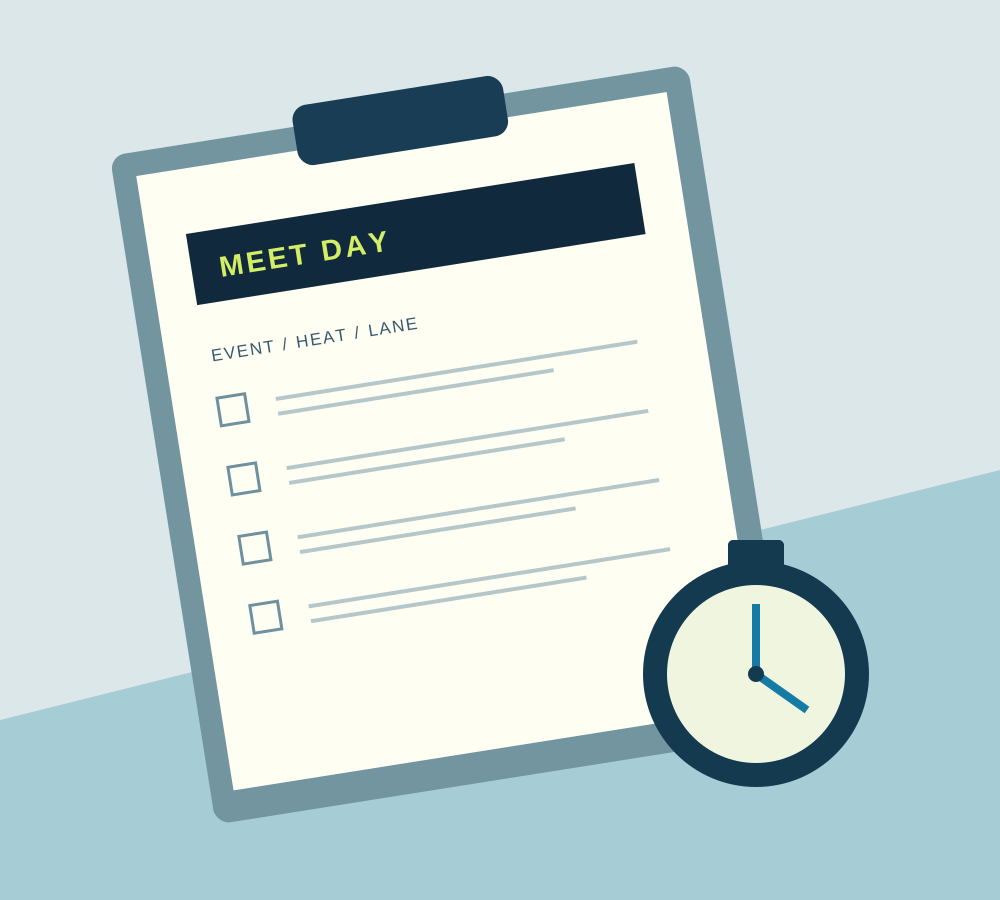
An event identifies the race category; a heat is one group of swimmers racing within that event; a lane identifies the swimmer’s position for that heat. Write these details together, and verify them against the latest information. Some meets publish assignments in advance, while others finalize them later.
Avoid guessing the exact time of a race from its event number. Sessions can move faster or slower than expected. Follow the posted progress and the coach’s directions. Before leaving the team area, make sure the swimmer knows where to return and whom to ask if an assignment changes.
Make the bag easy to use
Pack familiar equipment rather than introducing untested goggles or a new routine on race day. Keep spare essentials in an accessible pocket, separate wet items from dry clothing and label belongings. Bring the items required by the team or venue, including suitable footwear and any relevant paperwork.
Food, drink and seating rules vary, so check before packing for a long session. A towel buried under everything else is less useful than one you can reach quickly. The goal is a bag that supports the day without turning every break into a search for equipment.
Let the coach manage the racing plan
Families help most by making the day organized and supportive. The coach can explain the intended warm-up, race focus and post-race routine. Avoid adding a second set of technical instructions immediately before a swim; it can make a simple task feel more complicated.
If a swimmer misses a detail or becomes unsure, help them find the designated team adult rather than guessing. Keep deck access routes clear and follow restrictions on spectator areas. A competition pool is a working environment with officials, volunteers and athletes all moving on a schedule.
Finish with a useful conversation
After the event, give the swimmer space to describe their own experience. Ask what felt familiar, what was surprising and what they want to understand better next time. A time or place can be one part of that conversation, but it does not describe every part of the performance.
Before leaving, follow the team’s check-out procedure and confirm that no further events or relay assignments remain. At home, unpack wet equipment and make one short note for the next meet. Repeating a reliable routine makes the second visit easier than the first.
| When | Check | Who confirms it |
|---|---|---|
| Before leaving | Address, arrival time, required items | Coach and meet announcement |
| On arrival | Team location and warm-up instructions | Designated team adult |
| Before racing | Event, heat and lane | Current assignments and coach |
| Before departure | Remaining events and check-out | Coach or team manager |
Common questions
Is the session start time my arrival time?
Usually the team has an earlier check-in or warm-up requirement. Use the coach’s specific arrival instructions.
Should I give technical advice before the race?
Keep the plan consistent with the coach’s guidance. A brief supportive message is often more useful than additional instructions.
Keep the source of instructions clear. Your coach, facility and meet organizer provide the directions for your actual session. Use this guide to understand the context and ask better questions.